Wednesday, July 31, 2013

The Parole Fiasco and Ron Schilling

Ron Schilling, is 71 now. this blog was put together
10 years ago and is still relevant- Ron has had a
 heart attack ,has been eligible for release  as an
old law prisoner , after serving 1/4 o f his sentence,
after 12 years for Ron and here he still sits. 


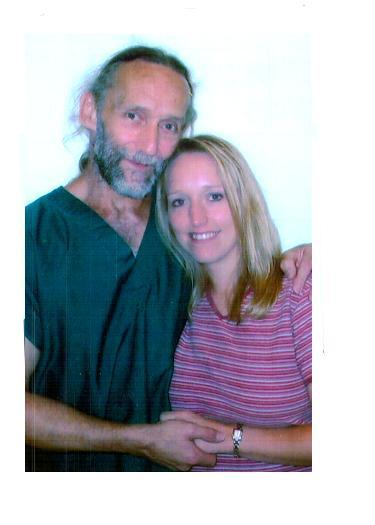
                                                                                                                Ron with daughter

" Mr Schilling has a keen mind and a good heart. If he is not a successful candidate for restoration to the community, then no one on my caseload could possibly be!"
Quote by Penny Adrian, Ron's Social Worker at Jackson correctional Institution-written in support of his parole bid in 2000.

Ron Schilling's Story
Ron was involved in a marijuana drug deal that went bad. The facts around this case are chilling. Ron was on a destructive road and admits now that prison probably saved his life and forced him to change. He has taken every available program, has gotten many degrees, and become an excellent litigator. He has shown himself to be responsible and kind. His spiritual life is at the center of his conscious existence. He has friends and backing for when he is released, is multi -skilled and talented and should do well.

In January, 2006, a group of prison activists met with parole chairman Lenard Wells, who promised that Ron Schilling would be out of prison "by the end of the month. We are asking you to read his story and join us in the effort to give this man a chance in the free world. He has been in prison for more than thirty two years, far longer than most prisoners with similar sentences.

The Crime: Here is Ron's description of the killing from a 2002 letter by Ron to John R. Burr, Assistant DA.

"As you know, I was arrested 13 June 1975 and ultimately convicted of intentionally killing Michael Posthuma during a drug deal. My two co-defendants (Robert Zelenka and Thomas Stanton) were also convicted of this same offense. I was never allowed to attempt testifying to the facts, and my co-defendants were constitutionally precluded from doing so. The clever manner in which the entire trial was hinged together prevented the truth from coming to light. I was convinced by council not to plead guilty to the offense because I was not at the point fully assured of my degree of involvement, but I knew I had not committed the offense as charged; I am referring to the lack of the 'intent' element. During the interrogation, when the Detective said my fingerprint was found on the victim's wallet (which turned out not to be the case), was the first moment I intuitively felt I had probably been involved in something horrendous, but still I was not certain to what degree.

I used to suffer grand mal epilepsy and, on the day in question, suffered quite a bad seizure. The periods following such seizures were frequented with post- ictal confusional states, where I was for the most part totally disassociated from reality. At the time of the offense, I was in such a state, despite the allegations you presented at the trial. The information I have about the entire offense has come from my co-defendants and from the coroner's report, etc. I have developed a fairly clear indication of my personal involvement in the offense, as well as the testimony of the coroner stating Michael would probably have died from the blows to his head even without the knife wounds.

Stanton began attacking Michael after a heated argument. He picked up a ballpean hammer which was laying in the back of Michael's van and hit him on the head with it; as it was explained to me, once offensively, and twice defensively. Directly after that, Stanton placed a knife in my hand and a split second following that Michael grabbed me from behind with a bearhug. I responded quite explosively, stabbing him repeatedly. The expert witness testimony described this action as predictable for someone in a post-ictal confusional state who was being restrained in such a manner. I believe it is called 'brief reactive psychosis.' And my God, that was not intended either.

I don't know how else to say it, this was not an intentional homicide. It's not like I was laying in wait for him to grab me from behind. He was supposed to be beaten- up, nothing more; not hit with a hammer, not stabbed with a knife, and certainly not killed. What is more, it is not to say Michael was innocently preyed upon, he was a known drug-dealing felon who was in the process of perpetrating a felony when he was killed. And for what it's worth, he was the one who instigated the violence against me, and not the other way around. To be sure Michael did not deserve to die, nobody does, but I have certainly and dearly paid for it. The bottom line is we all made bad choices that fateful day. God, we were all young and ignorant; ignorant of the laws of our own nature, and completely oblivious to the youthful indiscretions leading us all to the circumstances of the offense. "

Click on links on the side bar to read documents by Mr Schilling explain the his case and parole situation very eloquently.
Also click on sidebar links to view letters about recent parole placement denial and more recent actions.
A Short Explanation of the parole Problem:
Ron Schilling is a "lifer," convicted in 1975 for killing a man. When Ron was sentenced, prisoners were eligibility for parole after 13.6 years, and the average life sentence in fact meant 13.6 years. That is, if the inmate showed substantial rehabilitation and used good behavior, he was rewarded with release on parole. And indeed, the judges' sentences were made with the expectation that the prisoner would serve far less time if he proved himself/herself capable of functioning well in society. Prisoners sentenced under this system are called "old Law Lifers".

In Wisconsin, old lifer's are being held indefinitely and illegally under the new law policies and laws called Truth in Sentencing. Ron Schilling is one of the people caught in this illegal net. We will also intoduce some of the other corruptions of a failed system of parole that Ron and others have fought against,which causes us to spend more money on prisons than we do on education, and gives us the highest incarceration rate in the world.

Ron is only one victim of a general effort to make release of prisoners as difficult as possible . His story is not unique except for the length of time he has been trying for parole. Ron has obtained a list of lifers paroled since 1975 and their histories.(click to view lifer's file) We hope to here shed light on the entire parole fiasco while we focus on this man. Later we will ask for letters of parole recommendation be sent to the new parole commissioner putting pressure on him to live up to his word. If you want to know more, contact Ron Schilling or FFUP. Information given below.
Other articles and essays
1) General View of Truth in Sentencing From the Milwaukee Journal-Sentinel:Mary Jahn's excellent series on Wisconsin's Truth and Sentencing law and 2 editorials

2) Lifer law Is Misused; by Los Angeles Times Syndicate

4) Copy of then Governor Thompson's memo denying parole to violent offenders.

5) List of actions that led up to the present prison overpopulation

Ron Schilling's present address:

Ron Schilling, #32219
Oakhill Correctional Institution
Box 938,
Oregon, Wi 53575-0938

Email contact to FFUP and Ron Schilling: swansol@mwt.net;
FFUP
PO Box 285
Richland Center, Wi 53581
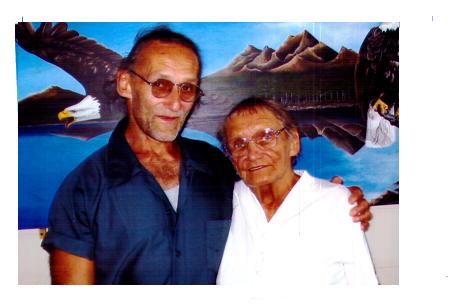
picture: Ron and his mother shortly before she died

Monday, July 29, 2013

the parole fiasco- a primer

NOTE: THIS BLOG Was put together a few years ago-  The history is still good, some of the essays excellent. To give you an idea of where parole stands now; in 1993 the parole board released 3,624 old law prisoners; IN 2013, 150 old law prisoners were released.

"The entire prison industry is not so much a moral failure as it is a designed systemic failure, geared to maintain exploding prison populations and satisfy the requirements for obtaining the billions of dollars in federal grants. Moreover, from a public-safety point of view the system is making matters worse. And from every perceivable angle, it is by design. Can it be turned around? There has to be a commitment to make sweeping changes in the system, but I do not imagine those sacrificial changes coming on their own. The system will not sacrifice itself for the sake of correcting corrections, or doing the right thing for the public good. " Ron Schilling

This is a short introduction to a big problem effecting all of us. We will be setting up a parole blog giving more information and including other inmates caught in the system. Here we will list the problem and give some explanation.

Put these five ingredients together and you get the enormous prison population we have today-
1) The federal Government gives big bucks to states that keep their violent offenders in prison as long as possible .
2) Each state is allowed to interpret the meaning of "violent " and Wisconsin has one of the stricter interpretations. The weapon does not need to be shown or used, noone needs to be hurt, and even if the perpetrated has no weapon- if the victim THINKS he/she has a weapon, it counts as a violent crime.
3) In 1994 Tommy Thompson signed a secret directive telling the DOC to keep violent offenders in prison as long as possible using any means possible.
4) Truth in Sentencing was passed in 1994. and is being illegally interpreted by the corrections departments around the country to keep in prison for far longer times than the original intent of their sentences prisoners who were sentenced before the law was passed. (a big subject see newspaper articles in this blog)
5) Catch 22 and no parole- this is one of the ways the prisons keep their people- the parole commission and the DOC each says the other has to give the inmate clearance for transfer to minimum security- a prerequisite for parole. This makes the parole hearings meaningless.


To Elaborate:

1)The Federal LAW -big bucks to keep and build for MORE inmates:. The law is 42 U.S.C. 137-13704., "violent crime control act of 1994." has been giving Wisconsin millions of federal dollars to keep a sub class of prisoners, classified as "violent' locked up as long as possible.(will have copy here soon)

2)Tommy Thompson's Directive: On April 28, 1994, then-governor, Tommy G. Thompson, issued a Policy Directive, sub rosa (under the table-secret, not put through the legislature), to the Department of Corrections Secretary which essentially abolished parole in Wisconsin for many prisoners

It should be noted that in addition to appointing the Secretary of the Department of Corrections, the governor also appoints the Chairperson of the Wisconsin Parole Commission, which is situated within the Department of Corrections. The Policy Directive reads as follows:

"I recently proposed and subsequently signed into law a bill to end mandatory parole for violent offenders in Wisconsin. In enacting that important change legal counsel advised that any retroactive change in the law would be unconstitutional.
Therefore, although 1 have ended mandatory parole for violent offenders, there are some inmates already in prison who are still governed by the old release law.
1 believe that mandatory release of violent offenders is wrong. That is why I called a Special Session of the legislature in 1987 to pass a "life means life" sentencing bill, and that is why 1 moved to end mandatory parole for violent offenders this year.
In order to implement this policy as fully as possible, ] hereby direct the department of corrections to pursue any and all available legal avenues to block the release of violent offenders who have reached their mandatory release date.
The policy of this Administration is to keep violent offenders in prison as long as possible under the law."
The Governor was advised by legal counsel that any retroactive change in the law would be unconstitutional. Knowing that it would be unconstitutional and fall under the ex post facto prohibition, he still issued his Policy Directive to the Department of Corrections, sub rosa in order to circumvent the Constitution. Knowing that he could not legally apply his Policy Directive to those prisoners who fell under the old release laws, the governor essentially "backdoored" his Policy.

The only way that the Department of Corrections/Parole Board can honor the former Governors Policy Directive is by denying these offenders a meaningful parole hearing; by giving these offenders one-defer-after-another, until the offender is very close to his mandatory release date, and then the Parole Board will give the inmate a parole grant, calling it a discretionary parole. Sadly, for many men and women serving old law life sentences, the new Policy Directive imposed has become a death penalty.

By honoring the Policy Directive to keep violent offenders from earning a parole, they have successfully circumvented the United States Constitution Article

Wisconsin Public Television aired a program in January of 2000, entitled "Wisconsin Prison and Politics", which addressed current parole practices in Wisconsin and pointed out that prisoners in Wisconsin -are serving their sentences up to their mandatory release dates. . In fact, Richard P. Jones, of the Journal Sentinel Staff wrote a very telling story about the Wisconsin Department of Corrections as early as February 7, 2000, recognizing "that the vast majority on inmates sitting in prison today, their chances of getting out early on parole are virtually nil, and it has little to do with the new truth-in-sentencing law.


3) statistics-Drastic decline in paroleThere has been a drastic and overwhelming change in the parole board's practices since the life of the Policy Directive of April 28, 1994, showing the drastic decline in release of inmates serving life sentences and the incredible increase in all other inmates having to serve their maximum time and being denoed early parole.
In 1992 , 2 years before the Thompson directive, 608 inmates were released on mandatory release ( latest date barring bad conduct) ,
in 2000, 4,424,inmates had to wait for their mandatory release- there were few early releases.

here are some other significant statistics.
1992, the board released 2,921 prisoners on parole and 648 prisoners did MR.
1993. the board released 3,624 " " 607 "
1994. " 3,325- 698
1995. " " 3,941 - " 965 "
1996. " - 3,705 - " 1,086
1997. " - 3,637 - " 1,291
1998. " " 2,627 - " 2,006
1999. " " 1,567 " " 3,347
2000. - " 2,325 " 4,424
2001. " 1,872 " " 4,131

4)Truth In Sentencing- a big subject. (see newspaper articles in this blog)
5)Pac rule and DOC rule: the catch 22of no parole.PAC1.06 ;7e
A recommendation for parole and a grant of parole shall be made only after the inmate has: (e) Reached a point at which, in the judgment of the commission, discretionary parole would not pose an unreasonable risk to the public

DOC 302.07 Factors in assigning a custody classifi­cation. The department may consider factors that include but are not limited to the following in assigning custody classification:
(12) Parole commission actions and stated expectations, and in the absence of any stated expectations, the likelihood of a release during the
review period.

Another ruse is the parole rule that states: parole will be considered(b) Served sufficient time so that release would not depreciate the seriousness of the offense (.PAC 196-b) yet there is no criteria for determining when the punishment is enough. AS is stated in one case ( Flynn vs DOC) . Flynn claims that it vas arbitrary, capricious and unlawful to deny him parole because he has not served 'sufficient time for punishment' when there is no subjective or objective criteria to define just what "sufficient tine for punishment * is AND that the Code which he was sentenced under shifted from the parole board to the sentencing court the responsibility of seeing to it that the •Punishment' aspect of his sentence would be satisfied when he his parole eligibility date, ..Thus, denying him parole without procedural due process when he was not allowed to present evidence that might reasonably make the determina­tion of the decision in question more in favor of discretionary parole. (Entire Flynn case will be on Parole blog soon)


Here is Ron's explanation:
"The Department of Corrections in the State of Wisconsin currently has in place and enforces prison classification rules and parole rules which conflict with one another, making it virtually impossible for prisoners to ever be properly classified and earn their release on parole; a right they retained prior to the implementation of the rules. A fair reading of the enclosures presents that a clear and unequivocal "catch-22" is created by the rules' combined operation.
If the mis-classification issue were properly addressed it would impact the correctional system on a fundamental level. As the enclosures depict, there is a definite problem with the way the classification and parole rules conflict with one another, forcing every prisoner to serve until their MR, PMR or discharge dates. The matter is made worse for Lifers since they do not have those options to begin with. It ultimately leads to the classic "catch-22" situation where a prisoner cannot be properly classified. Potentially forever.
I have personally been litigating against this precise issue in various State and Federal courts since 1989. After I prevailed in 1990, where the Judge declared the rules to be in violation of the Constitution, I was properly classified until 1998, when DOC began using the rule again. This rule still creates the same effect of the "catch-22" controversy mentioned in the enclosures, and is a designed result of the rules' operation. Consequently, it is the predominant reason for the massive overcrowding in the prison system, needlessly costing the taxpayers many billions of dollars." Here is Ron's final eloquent plea for overhaul of the system :

"The entire prison industry is not so much a moral failure as it is a designed systemic failure, geared to maintain exploding prison populations and satisfy the requirements for obtaining the billions of dollars in federal grants. Moreover, from a public-safety point of view the system is making matters worse. And from every perceivable angle, it is by design. Can it be turned around? There has to be a commitment to make sweeping changes in the system, but I do not imagine those sacrificial changes coming on their own. The system will not sacrifice itself for the sake of correcting corrections, or doing the right thing for the public good.
In closing, I thank you in advance for any and all attention you can bring to this important matter. Please feel free to contact me personally if you have any questions about any aspect of this matter. " Ron's address is:Ron Schilling #32219;OCI;PO Box938; Oregon, Wi53575

Back to Free Ron Schilling main page

Friday, July 26, 2013

A Letter written long ago but still pertinent now

17 February 2007                                     Ronald Schilling
Oakhill Corr. Inst. Box 938
Oregon, WI 53575-0938
      Charity Eleson.
WI Council on Children & Families
555 W. Washington, Suite 200
Madison, WI 53703
Re: NOW interview Dear Ms. Eleson:
As a preamble, let me say that I laud your efforts to help make things better for children. The world needs more people like you to step up to the plate and bring more light to a dark situation.
This will likely be the most unexpected response you've received to your NOW interview aired on 1.1907. I am a prisoner serving a life sentence since 1975. I am also an enthusiastic student of the disciplines surrounding the topics you discussed, and have claimed plural college degrees since being incarcerated. I have also been studying the evolution of the so-called "correctional" system over the decades and have developed an exhaustive perspective of what it does and doesn't accomplish, and the reasons therefor. And, subsequently, I have a LOT to say about it all.
I perused the NOW broadcast with great interest and found your presentation informative and honest. I suspect not having been incarcerated yourself would cause some aspects of the incarceration experience to be obscure. Similarly, I suspect not being well-versed in State and federal law would cause some naivety and prevent you from understanding the bigger picture of congressional intent with regard. to overall incarceration practices in this country. My intent is to hopefully enlighten you to some of the intended and unintended situations caused by the intersection of these separate aspects.
When I first entered the correctional system things were considerably different in that prisoners: were dealt with more compassionately and fairly with regard sentencing, programming, education and genuine rehabilitation, the mean average length of time served to parole or release, as well as the overall conditions of confinement. For a number of years things progressively got better for prisoners because of a fount of litigation we pursued. Through the late 1980's and 90's things took a hard turn for the worse due to Legislative changes in law and policy ostensibly created to foster the "tough on crime" posture. And these changes were brought to bear in response to the Congress.. The true Congressional intent is irrelevant at this point but I will touch on it later for this line of inquiry because it is solely the reason things are as they are.
You have likely heard about some of the laws to which I refer; the Truth In Sentencing statutes, for instance, which take their language in large part from 42 USC §13701, at seq., the federal appropriations statute providing billions of dollars to the States to create laws along those lines despite the proven negative efficacy and inefficiency. A fair reading of that statute will explain a great deal about why things are as they are with regard to the "corrections" industry. There are also provisions supplying monetary grant incentives for increasing arrest rates, increasing conviction rates, creating new statutes for crimes where there were no crimes before, creating administrative rules which keep prisoners incarcerated for Longer periods of time, and things like that. All this, despite the corrections system more than proving itself not to work. Which begs the question, why continue to provide billions in tax flac to expand a process proven not to correct anything or reduce crime or make the streets safer? The Congressional intent astounds me.
While my main interest has naturally been focused on the adult population in the prison industrial complex, I have also witnessed the same phenomenon increasingly focused more toward youthful offenders. And this is the unique prospect I want to touch on with this writing.
You mentioned that there needs to be a change in the ways children are treated in the justice system.. To be sure, there are definite changes in the making as I type this, some of which have been in the works for some time. Unfortunately, those changes do not bode well for youthful offenders, and the purported changes are not beneficial beyond the smoke and mirror lip service for politicians. Even with an increase in advocacy the problems manifest and - by design - continue to worsen. And that escalation is designed to target everyone who refuses to stay in the lines or be obsequious or obedient. To illustrate the points children are being targeted through changes in the laws, says governing truancy. They can now be referred to the District Attorney for prosecution and thrust into the criminal justice system and, thus, tagged.
And this escalation continues because youth are no longer valued as they should be. They are thus undervalued if merely attending school, especially when they are using the resources of the facilities and refusing to be subservient on top of it; they are simply not stimulating the economy in positive fashion. The child costs the government and doesn't produce the desired result of being a compliant worker and consumer. Accordingly, and conversely, place this same child in a cage and he suddenly generates about $601 in annual revenue.
The data coming from the Bureau of Justice Statistics are deplorable and reflect a trend of youth being incarcerated at alarming rates. The fastest growing population in that segment is that of young females. The latest issue of the Prisoner's Action Coalition Newsletter <pactjon@tth.net> can an entire page article on a PBS documentary on some of the operations at the Taycheedah womens correctional facility in Fond du Lac. One hard fact depicted the current age range being 14 - 74 years. It is a glaring absurdity to imagine there is no other solution for a 74 year old woman than a prison cage. Same for the pregnant 14 year old child. There has to be changes implemented that are more socially sensible. . .
       As for attempting to make those changes in the way children are treated by the
       Department of Justice, I laud the proposition but have serious questions about
the possibility given the penalphobic mentality increasingly instilled in the public's mind. The notion of being "tough on crimes' remains too appealing to the public when, in fact, it has nothing to do with the prospect of crime. It truly is not even designed to deal with the symptoms of crime much less actually making the streets safer. I have witnessed incredible atrocities over the decades, including the intentional evolution of it all, and it makes my heart ache to see legislation continually passed targeting children for the same draconian treatment.
But, alas, I believe in the resilience of the human condition. Missing the usual windows of developmental Qpportunity is not always asdespairing as the above scenario suggests. Truly, and albeit I entered the prison system as an adult with a BA in Music, I would be in terrible trouble if missing the proverbial window were the end of it. Certainly, early childhood educational development is important during the formative years to shoot for the open windows, so to speak, but it is without doubt that the human brain's physiological development can occur with a vengeance later in life as well, depending on an amalgam of things like exercise, diet and environment.
It saddens my heart to witness first-hand how the Department of Justice and the Department of Corrections deal with a compulsive truth-teller who holds it in their face and presses a little. I have authored numerous letters to Legislators, administrative officials, State Representatives, Sociology professors, and all have stuck their heads in the sand to duck the issues. The only action I experience for my effort i more resentment and blatant retaliation. Seriously, I would have been paroled more than a decade ago if I was not of the ilk to stand up when I see bad things happening. But, moreover, I have to be able to look myself in the mirror with the knowledge that 'I have done all that I can to set things right.
I wish I had all the answers on how to force the issue. I do have quite a few admittedly radical ideas that could easily be employed but they continue to fall on deaf ears. It is one HUGE bureaucratic beast, we are attempting to change, and one tendentious to the current administration and Congressional intent.
I also believe that crime, per se, could be pragmatically eliminated if that were the intent; especially with the many billions of dollars being funneled into the process. But Congressional intent is the only real consideration when promulgating and implementing new laws and policies. Sadly, that intent is to incarcerate just as many people as humanly possible -- mainly, those who venture outside the lines in some way. forget to click your seatbelt and you will be tagged into the system as someone who is not compliant. And it's not about attempting to correct anything but, rather, to tag those people for future reference on potential radicals. Congress is looking far ahead into the future.
The children need to be taught differently if they are to avoid "correctional"
entombment. The truth of their potential plight needs to be put in their
face, as well as teaching them to leap across disciplines and see the bigger picture. Kids are not stupid -- they can see through the political, rhetoric with minimal guidance and be brought to realize their true potential while remaining free of the insanity these places generate. I feel if children were brought to understand how and why they are being tagged for this sort of future they would be more circumspect about their actions. Again it has nothing to do with crime.
With regard to the system itself, it is designed to fail any purported "correctional" objective. I say this knowing the fundamental truism that .,,systems do not fail.! ,Any -system only functions as well as what is put into it. No better, no worse. The system does not fail but truly does not affect equitable justice. The so-called "correctional" system does not correct anything but, as in my case, it can cause a thinking and feeling human being to better himself by becoming vastly more educated and, thus, stronger and a more empathize compassionate entity. But, again, the system Is not designed for "correcting" anything and left to its own design will produce only deplorable and pathetic individuals capable of little in the way of productive activity.
In closing, I want to apologize if this writing seems crass or makes me appear bitter; if anything I experience more annoyance than anything. I cannot logically be bitter about something I understand so completely. After 32 years of studying this system from every coign-of-vantage I certainly do understand it. My annoyance is derived from the insanity of it all; seeing the system doing the same thing over and over and pretending to expect some different result there from. It is infuriating when attempting to bring about meaningful change.
      If there is anything you would like to know about any of the above --- the
laws, policies federal statutes or Congressional intent - I am open to any discourse on the matter. Until then, my prayers are with you and any and all children you are able to lead away from these cages. God bless.
Sincerely
Ronald Schilling


Thursday, May 10, 2012

Old recommendations come to light

Ron Schilling recently was shown these recommendation letters By the parole board- a nice surprise even if they were written long ago.


Wednesday, February 08, 2012

Saturday, December 03, 2011

Letter to all

from:Ron Schilling #32219
Oakhill Corr. Inst.
Box 938
Oregon, WI 53575-0938

to:Bruce Vielmetti
Milwaukee Journal Sentinel
333 W. State Street
Milwaukee, WI 53201

26 September 2011

Re: Chisholm's suggested prison reform

Dear Mr. Vielmetti:
Let me begin with a belated compliment on the Chisholm article you authored back in February. It is my earnest hope that something positive has occurred since then and that this writing will encourage you to follow-up on it.
The Forum for Understanding Prisons (FFUP) only recently sent me a copy of your article covering the Chisholm speech at Marquette Law. The article was well written, but the prospect of yet another proposal to "rethink the criminal justice system" is, well, nearly nauseating. The mental process has more than been exhausted; action is long overdue.
The problem is multi-faceted and merely addressing one point of interest will never do much to comprehensively correct corrections. Chisholm hit one of the nails squarely on the head when stating, "if they're serious about one of their biggest deficits, this is a real opportunity." But then in the next breath he digresses with "people just have to start thinking about it." The problem is that the identical issues have been thought about ad nauseum and by agencies with that express purpose in mind. Trouble is, none of the resulting committee recommendations are implemented. And the reasons for this are themselves multi-faceted and have been occurring for decades with byzantine complexity.
In the insular world of corrections, the system has become morally numb as it becomes ever more aligned with political and corporate ideology. It has been a gradual evolution of power resulting in sparse allegiance to the tenets of traditional common sense, economics, morality or justice. The reigning corporate ideology has infected the minds and hearts of legislators and DOC personnel so thoroughly it creates a disconnect and an inability to see that the dark machinations of their corporate power is itself a criminal enterprise that helps plunder the nation and destroy millions of lives, leaving them all the more morally bankrupt.
What is more, free rein amorality is praised by those operating the system — they exemplify subservience to various political aspects of DOC and the abject careerism that poisons the prison industry and leaves it with no real moral compass. They know the demands of the industry and understand the bottom line of the play-book completely and have ingested all the byzantine quirks to a point where they cannot finally make independent moral choices. And thus meaningful recommendations become mere rhetoric and the hymns of instruction fall upon deaf ears.
We are all impacted by the system; those in positions of control as well as those captives dwelling in the bowels of the beast. When a captive allows an institution to provide him with his identity and sense of self-worth he becomes an obsequious pawn, no matter how much intelligence or talent he possesses. He lives in perpetual fear of what those in authority think of him and might do to him. Such a mechanism of internalized control is highly effective. The rules for advancement or release are never clearly defined or written down. Moreover, careerists pay lip service to the stated ideals of the system which are couched in lofty rhetoric about balance, impartiality, neutrality, fairness and justice. Conversely, at the same time they astutely grasp the actual guiding principle fostered by those in control and advanced by a self-serving media, which is not to significantly alienate the corporate and political power elite upon whom the system depends for fresh captives and funding for their enterprise.
Those who master the duplicitous game do well. Those who cling tenaciously to a desire to tell the truth, even at a cost to themselves or the institution, become a management problem. Such is my personal experience. But one's position must be contemplative, not only to recognize the Maoist tendency to hammer the hardest on the nail sticking up the farthest, but to realized when one sticks with what has already been done there is generally no true advancement.
If Chisholm examines the effects of systemic hubris and the pathology of the system's self-infatuation; if he looks at the system's large and small failures — as well as its relatively few successes — he will eventually push past the myth of corrections peddled to him by legislators and DOC minions and uncover its troubled core.
As things stand, it is no longer about "corrections." There is nothing being corrected by the current mess. "Corrections" has been leached of all real meaning, and only the notion remains of a parole opportunity even for the most deserving. Even the most hardheaded critics must concede that rethinking a failed policy is not a weakness — nor soft — but the only wise way to proceed.
And be it not unlike me to expose a perceived problem, but I would be remiss to not also offer valid suggestions to correct corrections. Chisholm acknowledges the exponentially increasing fiscal problem, and states it is in part due to parolees violating the conditions of their parole. While that is a despicable and unnecessary problem, other States have realized the ineffectiveness of it and have done away with parole revocation for minor infractions of rules. That alone would achieve a 40% decrease in the recidivism problem and yield a significant fiscal savings.
An even bigger problem is one of judicial intent not being adhered to. It is HUGE, and largely ignored. And it is increasingly costly as more captives are entangled in the system. But it's not necessarily the system's fault; any system is only as good as what is put into it. And in this case, there simply are no safeguards in place to make the system accountable to the tenet of judicial intention.
Contrary to Chisholm's thoughts, all changes do not need to come from Madison, nor do they need to be studied by yet another committee/ nor sponsored by some legislative Act. Enormous benefits could be realized on a personal level if various people would act more responsibly.
For instance, if Chisholm himself is sincere about trying to save the State millions of dollars each year he could immediately implement a procedure to follow-up on those captives he was responsible for prosecuting. Some simple mousing around the DOC data archives would yield data allowing him to confirm just how much time has been served by any given captive, and how far it is beyond the mark of the sentencing judge's intent. And I offer my own case as an illustration/ where the judge intended for me to serve the mean average at the time of sentencing — which was 13.6 years — and yet here I sit well into my 37th year. And truth be known, I had a more honest opportunity at obtaining a parole 20 years ago than I do under the current incarnation of the parole schema.
For more information on the manifest problems creating the above scenario, please visit and peruse some of the essays.
Thank you for your time and attention to the above matters. Sincerely/
. Ron Schilling
cc: Senate Committee :on Judiciary/ Utilities/ Commerce/ and Government Operations: Senator Zipperer (R)/ Chair Senator Neil Kedzie (R) / Vice Chair Senator Pam Galloway (R) Senator Fred Risser (D) • Senator Jon Erpenbach (D)
Assembly Committee on Criminal Justice and Corrections: Representative Gary Bies (R) / Chair Representative Andre Jacques (R) / Vice Chair Representative Steve Kestell (R) Representative Ed Brooks (R) Representative Scott Krug (R) Representative Frederick Kessler (D) Representative Robert Turner (D)
Milwaukee DA John Chisholm
Forum For Understanding Prisons
WI-CURE
WI Prison Watch
WI Network for Peace and Justice
-3-

picture of original letter


Thursday, August 04, 2011

latest documents, latest heartbreak

Another denial of parole 5/11


(above is 5/11 parole decision, document 1. click to view larger, transcribed below)


PCAT240
DEPARTMENT OF CORRECTIONS
Parole Commission
DOC-1208 (Rev.09/2008) W1CS
PAROLE COMMISSION ACTION
WISCONSIN
Wisconsin Statutes
Chapter 304
Administrative Code
Chapter PAC1
OFFENDER NAME
SCHILLING, RON
DOC NUMBER
032219
INSTITUTION NAME
Oakhill Correctional Institution [OCI]
AGENT NUMBER
70511
T1S
No
980
No

RECOMMENDED ACTION TAKEN
Defer (for 6 Months)
NEW FED
01/26/2012
MR/ES
Life Sentence
RECOMMENDED ELIGIBILITY DATE
DATE ACTION TAKEN
05/11/2011
HEARING TYPE
Parole Review

If you are recommended for a parole grant, the time frame within which you shall be released, as established by the chairperson of the Parole Commission, shall be reflected in the grant.
GENERAL REASONS FOR ACTION TAKEN
1. Parole Plan - approved
2. Release at this time would involve an unreasonable risk to the public.
3. Your institutional conduct has been satisfactory.
4. You have NOT served sufficient time for punishment.
5. Your program participation has been satisfactory.
PAROLE COMMISSION COMMENTS
At 59 years of age, you have served 36yrs 2 mos. and you are serving your 3rd period of adult incarceration as a violation of probation with new sentence for PTAC of armed robbery, and PTAC of 1st degree murder, which occurred in June of 1975, and involved you and an accomplice planning to rob a drug dealer, and during the incident, the man was not only struck with a claw hammer and pipe, but you stabbed the victim approximately 20 times resulting in his death. You have a lengthy offense history which dates back to when you were a juvenile.

You have been at OCI since May of 2006, your institution conduct has been and remains good (minor conduct report in 5/2009) and you have no unmet programming needs. You have not held an inst job since 7/16/1997 per your account and said you keep yourself busy writing. The SW summary says unassigned since 5/2006. When seen in the past you said you were receptive to a return to the center system and off grounds employment for reentry purposes. When PRC saw you and talked about inst job and transfer to Milw Ctn, you were not interested. Your interest is purely release and not following the rec of ERRC or PRC. As I stated today, doing it your way will not lead to release. You need to do what is told/rec to you. For the aforementioned reasons, the ERRC again endorses a reduction in custody rating to minimum community custody status and opportunities in the comm. as determined and at the discretion of the inst. for a period of monitoring. In the mean time I again stressed you need to get an inst job to show motivation as told to you by PRC. You have been in the WCCS several times in the past. You do have an approved plan for Milw but transition is necessary first. You need to follow what you are told! The increase to a D-6 is soley meant to give time to be reviewed by PRC in 6/2011 and if approve custody reduction and/or move, time for this to happen. The defer is not due to misconduct or meant to be negative. LANGUAGE ON THIS FORM DOES NOT REFLECT CHANGES PURSUANT TO 2009 WISCONSIN ACT 28

Below is 5/11 parole decision, document 2. click to view larger, transcribed below.


PCAT240
DEPARTMENT OF CORRECTIONS
Parole Commission
DOC-1208 (Rev.09/2008) WICS
PAROLE COMMISSION ACTION
WISCONSIN
Wisconsin Statutes
Chapter 304
Administrative Code
Chapter PAC1
OFFENDER NAME
SCHILLING, RON
DOC NUMBER
032219
INSTITUTION NAME
Oakhill Correctional Institution [OCI]
AGENT NUMBER
70511
ITS
No
980
No

RECOMMENDED ACTION TAKEN
Defer (for 6 Months)
NEW PED
01/26/2012
MR/ES
Life Sentence
RECOMMENDED ELIGIBILITY DATE
DATE ACTION TAKEN
05/11/2011
HEARING TYPE
Parole Review

RECOMMENDED CONDITIONS OF SUPERVISION
REQUESTS FOR INFORMATION
TYPE
COMMENTS
DUE DATE
STAFF
Program Endorsement
Program Endorsement
Support review for custody the discretion of the inst Support review for custody the discretion of the inst
reduction and an opportunity in the comm. as dtermined at reduction and an oppotunity in the comm. as dtermined at
12/31/9999 SUTTON, i//Ji/yyyy JAMES R
12/31/9999 AET, ANGELA

MEMBER

R. VerhagenN1406


SIGNATURE

PAROLE COMMISSION CHAIRPERSON
DATE APPROVED
05/11/2011
The recommended action is approved for the stated reasons.
SIGNATURE
' File Review
THERE IS NO ADMINISTRATIVE APPEAL OF THIS DECISION
DISTRIBUTION: Original - Institution (SS File); Copy - Offender; Copy - Parole Commission; Copy - PRC; Copy - Agent Copy -

Thursday, February 24, 2011

Denied Freedom once again: 2011

I should have accepted the plea bargain for 20 years. After trial the sentencing judge heard all the testimony and saw all the evidence, and intended me to serve 13.6 years on my life sentence. That was the mean average length of time at the time, and if a guy was well-behaved and lived within the rules, he was back on the streets in that time. Incredibly, and without explanation, in June I begin my 37th year of incarceration. And I am by all standards a model prisoner and have corrected the pathology of my offense to assure myself that it could never happen again. I have also claimed three additional college degrees in Geology,Business Administration and Law and even claimed ministerial credentials. My conduct is exemplary, and I always do the absolute best I can with what I have, volunteering for work assignment and helping others at every turn, even saved two lives with the Heimlick maneuver. I participate in Restorative Justice seminars, victim-impact classes, and numerous extracurricular educational activities. I am self-didactic and strive to educate myself and others.

The main trouble I experience is the lack of accountability in the parole apparatus. There is a hard "trust" issue after some 30+ interviews; not one has been forthcoming, truthful and honest. The concepts of due process and fair play no longer apply to the parole commissions' actions; it has become a vapid, hollow charade as the rules, policies and attitudes change on a whim and I am then held to increasingly stringent standards. Sadly, I had a better chance at parole 20 years ago.

My parole saga began when I became parole-eligible in '87. My custody level was reduced to minimum-security in '91 and in '92 the sojourn through minimum custody centers began. With each transfer I worked harder than any 10 guys trying to make a positive showing and work my way out of the system. Each time, however, the parole commission would send a memo and/or make a clandestine phone call resulting in my being returned to higher security.

That occurred five times — the last time in '97. In 2006 parole Chairperson Lenard Wells granted me a parole after considering all relevant criteria, but then reneged for no valid reason, being disingenuous to my supporters.

Also problematic is that the victim in my case has many close friends and relatives throughout the DOC system. The guy's Uncle was the Security Director at Waupun when I arrived, and upon retiring he took a position on the parole commission. That coincided with the above fiasco.

Presently, my parole agent accepted and approved the parole plan for Milwaukee, and had me sign the parole rules. An apartment is being held open for me; two jobs are being held open for me, all resources and support personnel are there to provide transportation to the parole office, and to get a driver's license. Moreover, I was raised in a family of small businesses, have always enjoyed the freedom of self-employment, and have a studied appreciation for business. I am also an accomplished guitarist and song writer, and have people ready to help me publish, copyright and market the many volumes of material I've written over the decades. Am also an avid inventor, and have people eager to explore and patent some of my inventions and ideas. Many believe both ventures could generate considerable employment, stimulating the economy and allowing me to give back to my community. In sum, there is no valid reason not to grant parole in this case. The parole commission should be charged with looking for ways to parole clients but, instead, they are not even trying.

Even more astounding , my co-defendant — who devised the plan for this offense, and who was undeniably the armed-robber and murderer perpetrating this case — was paroled some 19 years ago. I have never understood that, and the parole commission refuses comment.